
Absalom
Hall
was
born
a
t
Moreton,
Staffordshire
o
n
7
th
April
1895
an
d
was
baptised
later
that
month
o
n
the
28
th
at
St
Mary’s
Church,
Moreton.
He
was
the
second
son
of
the
fourteen
children
born
t
o
Charles
and
Fa
nny
Hall.
Three
o
f
their
children
died
in
infancy
.
His sc
hoo
ling over
Absalom found work
a
s a farm labourer
.
With
the
coming
o
f
war
i
n
August
1914
Absalom
was
a
n
early
volunteer
into
the
military
when
o
n
23
rd
November
1914
he
enlisted
a
t
Nottingham
into
the
Royal
Marine
Light
Infantry.
When
his
basic
training
was
c
ompleted,
h
e
was
posted
to
the
Ro
yal
Marine
Brigade
and
then
to
Gallipoli.
He
arrived
a
t
Gallipoli
an
d
was
wounded
o
n
the
9
th
o
f
May
1915
and
died
o
f
thos
e
wounds
on
23rd
J
une
1915,
ag
ed
20.
He
is
commemorated
on
the
Helles
Memorial,
o
n
the
Gallipol
i
Pen
insular in T
urkey and
o
n the Naval Memorial
a
t
Po
rtsmouth.
His
parents
were
told
(by
a
retur
ning
soldier)
that
h
e
had
just
started
bringing
horses
ashore
from
the
s
hip
an
d
was
caught
b
y
cross
fire
(
and
probably
hi
nde
re
d
b
y
barbed
wire
hidden
under th
e wave
s).
His
older
broth
er
Thom
as
was
killed
in
action
serving
with
the
South
W
ales
Borderers
on
22
nd
Novem
ber 1917.
Absalom H
all
Priva
te PO/400(S) – Royal Marine Light Infantry
Ki
l
led in
Ac
tion 26 J
une 1915
– a
ge
d 20
Remem
ber
ed on
the Hel
l
es
Mem
orial
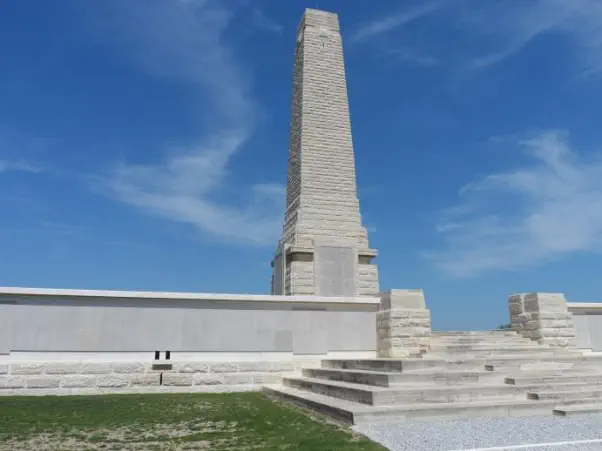
Helles Mem
oria
l
Histor
ical In
for
mation
The eight month ca
mpai
gn in Gallipoli
w
as fough
t
by Co
mmonw
eal
th
and
French
force
s in an
attempt to force Turkey out of the war, to relieve the deadlock of the Western Front in France
and
Belgium, and to
open a s
upply route
to
Russia thr
ough the
Dardanelles an
d the
Black Sea.
The Allies landed on the peninsula on 25-26
April 1915; the 29th Division at Cape Helles in the
south and the Australian and New Zealand Corps north of Gaba T
epe on the west coast, an area
soon known as Anzac. On 6
August, further landings were made at Suvla, just north of Anzac, and
the climax
of the
ca
mpai
gn came in early Augus
t when simultaneous
assa
ults were launched on
all
three fronts. Howeve
r, the difficult terrain and stiff Turkish resistance soon led to the stalemate of
trench warfare. From the
end of August, no furthe
r se
rious ac
tion was foug
ht and
the
lines
remained un
changed. Th
e peni
nsula was suc
cess
ful
ly evacuated
in Dece
mber
and ea
rl
y Janua
ry
1916.
The Helles Me
morial se
r
ves the
dual function
of Commonwealth
bat
tle
m
emorial
fo
r
the
whol
e
Gallipoli campai
gn and p
l
ace of com
me
mora
tion f
or many of
those
Com
m
onw
eal
th servi
ce
men
who di
ed the
re and
have
no known
grave
.
The Uni
ted Kingdom
and
Indian
force
s na
med on
the
memo
rial
di
ed in ope
rations
throughou
t
the
peninsula, the
Australians at Helles. The
re are also panels fo
r those
who di
ed or were bu
ried at
sea in Gallipoli waters. T
he me
morial bea
rs more than 21
,000 na
mes
.